
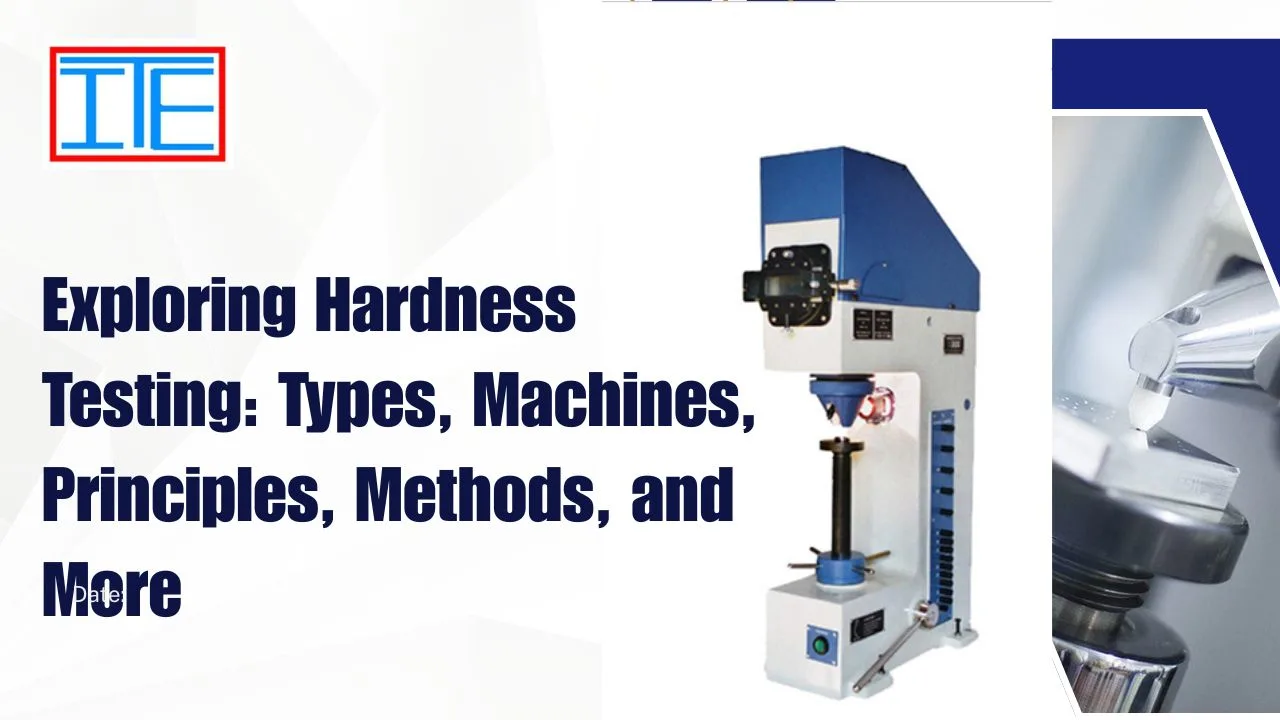
In the world of materials testing and quality control, hardness testing plays a crucial role in determining the strength, durability, and resistance of materials. ITE Noida, one of the most trusted names in testing and training, continues to offer the most advanced solutions and knowledge in this field, ensuring that engineers and technicians are equipped with the right tools and understanding to assess material hardness accurately.
What is Hardness Testing?
Hardness testing is a method used to determine how resistant a material is to deformation, scratching, indentation, or wear. The results from a hardness testing machine help engineers understand a material’s ability to withstand mechanical stress, abrasion, and impact. Whether for metals, plastics, ceramics, or composites, hardness testing ensures that materials meet the required quality and performance standards.
Principle of Hardness Testing
The principle of hardness testing is based on measuring the material’s resistance to penetration by another harder object, typically using an indenter or penetrator. When a specific force is applied through the hardness testing machine, it creates an indentation on the material’s surface. The size, depth, or shape of this indentation determines the material’s hardness value. Different methods and types of hardness test use different types of indenters and loads to suit various materials and testing requirements.
Benefits of Hardness Testing
Performing a hardness test offers multiple advantages for manufacturers and engineers.
- Non-Destructive or Minimally Destructive: Many hardness testing methods cause minimal damage to the material, allowing it to remain usable after testing.
- Quick and Reliable Results: Hardness testing provides fast measurements, making it ideal for production environments where time efficiency matters.
- Wide Application Range: Hardness testing can be applied to metals, alloys, plastics, ceramics, and coated materials.
- Improved Product Performance: A surface hardness test ensures components can resist wear, abrasion, and mechanical stress.
- Enhanced Safety: Testing materials before use reduces the risk of structural failure in critical applications such as bridges, vehicles, and machinery.
ITE Noida works closely with industries to offer hardness testing services that enhance product performance and operational safety.
Types of Hardness
It’s important to know the types of hardness that exist in materials science. Hardness can be classified into three main categories:
- Scratch Hardness – The resistance of a material to being scratched by another object.
- Indentation Hardness – The resistance of a material to deformation due to an applied force.
- Rebound or Dynamic Hardness – The ability of a material to resist impact or return energy upon being struck.
These types of hardness are evaluated using different testing techniques and machines depending on the application.
Types of Hardness Test
ITE Noida continues to offer advanced testing solutions and training on each of these methods, ensuring accurate and reliable results. The most commonly used hardness tests include:
- Brinell Hardness Test: The Brinell hardness test uses a hard steel or tungsten carbide ball as an indenter. It is pressed into the material under a specific load, and the diameter of the indentation is measured.
- Rockwell Hardness Test: The Rockwell hardness test measures the depth of penetration under a standard load using a steel or diamond cone indenter. The result is displayed directly on the machine, making it one of the easiest and quickest tests to perform.
- Vickers Hardness Test: The Vickers hardness test uses a diamond-shaped pyramid indenter and measures the diagonal length of the indentation under a microscope.
- Knoop Hardness Test: The Knoop hardness test is similar to the Vickers test but uses an elongated diamond indenter. It is commonly used for microhardness testing on small samples or thin coatings.
- Shore Hardness Test: This test measures the hardness of non-metallic materials such as rubber, plastics, and elastomers. The Shore hardness machine measures the resistance of the material to indentation by a spring-loaded needle.
Also Read : Everything You Need to Know about Guided Bend Testing of Welds
Applications of Hardness Testing
Hardness testing is widely used across industries such as:
- Automobile manufacturing – To test engine parts, gears, and shafts.
- Aerospace – To ensure durability and fatigue resistance of components.
- Construction and Infrastructure – To check metal and concrete strength.
- Electronics and Plastics – For testing coatings and polymers.
- Research and Development – To study new materials and alloys.
By providing insights into a material’s strength and performance, hardness testing helps industries make informed choices for production and design.
Hardness Testing is an essential process in modern manufacturing and engineering that helps determine a material’s strength, reliability, and performance. ITE Noida continues to provide the latest hardness testing technologies, equipment, and training programs to industries and educational institutions. Whether you are looking to enhance your testing capabilities or understand the type of hardness most relevant to your application, we ensure you have the right expertise, precision, and reliability at your side.