
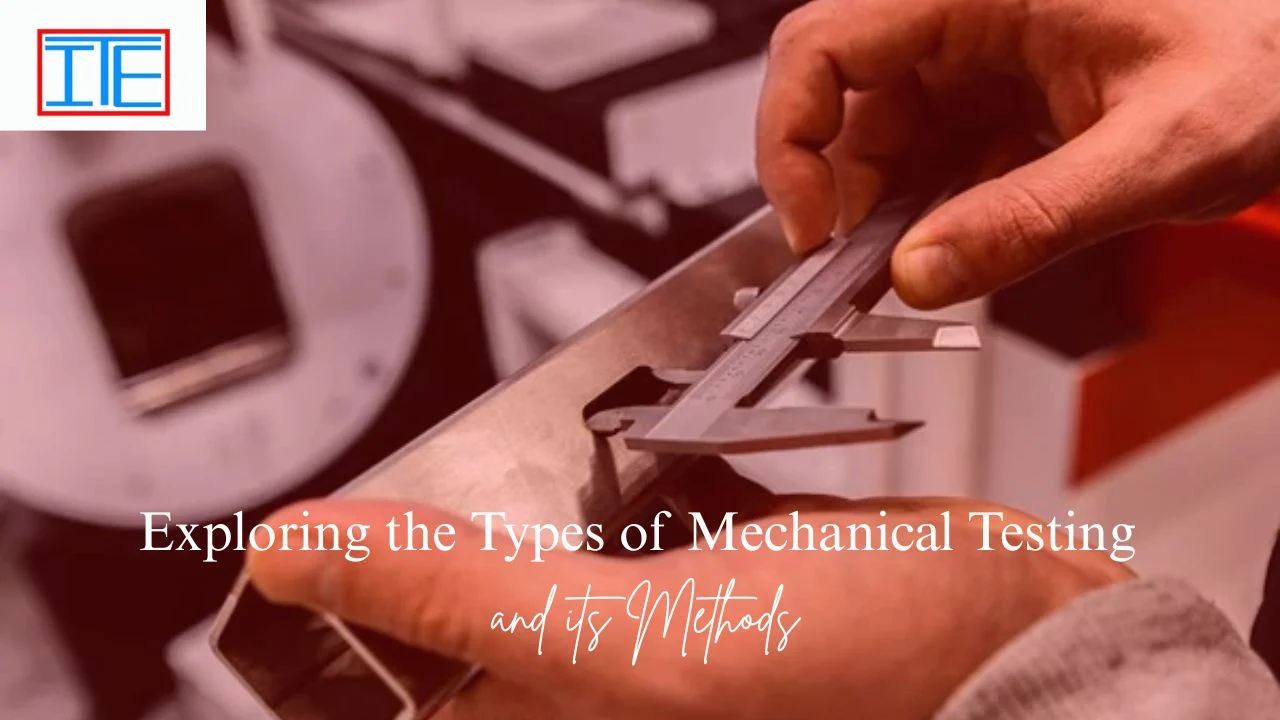
ITE Noida plays an important role in helping industries understand the strength, durability, and reliability of materials through accurate evaluation processes. Mechanical Testing becomes a critical part of quality control, product development, and safety assurance. By applying different mechanical test methods, industries can ensure that materials meet required standards and perform reliably in real-world applications. We provide comprehensive mechanical testing solutions that help manufacturers, researchers, and engineers make informed decisions about material selection and product performance.
What Is Mechanical Testing?
Mechanical testing refers to a set of procedures used to evaluate the physical and mechanical properties of materials when subjected to various forces. These forces may include tension, compression, bending, impact, or cyclic loading. A mechanical test helps determine key properties such as strength, hardness, toughness, ductility, elasticity, and fatigue resistance.
Importance of Mechanical Testing
Mechanical testing plays a vital role in ensuring that materials and products perform safely and reliably in real-world conditions.
- Ensures Material Strength: Mechanical testing verifies whether a material can withstand required loads and stresses without failure.
- Improves Product Safety: Each mechanical test helps prevent accidents by identifying weak or defective materials before use.
- Supports Quality Control: Regular mechanical testing ensures consistency and maintains product quality across production batches.
- Validates Design Performance: Mechanical test results confirm whether designs meet engineering and performance expectations.
- Prevents Costly Failures: Early detection of material issues reduces the risk of breakdowns, recalls, and repairs.
Types of Mechanical Testing and Their Methods
- Tensile Testing: Tensile testing is one of the most common forms of mechanical testing. In this mechanical test, a material sample is pulled apart until it breaks. Tensile testing is widely used to evaluate metals, plastics, and composites for load-bearing applications.
- Compression Testing: Compression testing evaluates how a material behaves when subjected to compressive forces. This mechanical test is especially important for materials used in columns, blocks, and load-supporting structures. It helps determine compressive strength and deformation characteristics under pressure.
- Hardness Testing: Hardness testing measures a material’s resistance to indentation or surface deformation. Common hardness tests include Rockwell, Brinell, and Vickers methods. Each method uses a different indenter and load, making hardness testing suitable for a wide range of materials. resistance.
- Impact Testing: Impact testing assesses a material’s ability to absorb energy during sudden loading or shock. This type of mechanical testing is crucial for materials exposed to dynamic or low-temperature conditions, where brittle failure can occur.
- Bend and Flexural Testing: Bend testing evaluates a material’s behavior when subjected to bending forces. This mechanical test is often used for metals, plastics, and welded joints to assess ductility and flexibility. Flexural testing is especially useful for brittle materials and structural components.
- Fatigue Testing: Fatigue testing examines how a material performs under repeated or cyclic loading over time. Many components fail due to fatigue rather than sudden overload. This type of mechanical testing helps predict the lifespan of components subjected to continuous stress, such as machine parts and structural elements.
- Torsion Testing: Torsion testing measures a material’s response to twisting forces. This mechanical test is important for components like shafts, springs, and fasteners that experience rotational stress during operation. It helps determine shear strength and torsional rigidity.
Also Read : What cause Fugitive Emissions at Oil & Gas facilities ?
Methods Used in Mechanical Testing
Mechanical testing methods vary depending on material type, industry standards, and application requirements. Tests are usually conducted according to recognized standards such as ASTM, ISO, or BIS. Proper sample preparation, calibrated equipment, and controlled testing conditions are essential to obtain accurate and repeatable results. ITE Noida offer standardized testing procedures using advanced equipment to ensure reliability and compliance with industry norms
Exploring the types of mechanical testing and its methods highlights how essential these processes are for ensuring material reliability and product safety. Each mechanical test provides valuable insights into how materials behave under different forces and conditions. By choosing trusted testing partners like ITE Noida, industries gain confidence in their materials, improve product performance, and meet regulatory requirements with ease. Mechanical testing is not just a quality check—it is a strategic investment in long-term success and safety.