ITE Noida is a trusted name in the field of non-destructive testing (NDT) solutions, known for supporting industries with reliable inspection methods that ensure safety and quality. Our company continues to offer advanced testing services and tools that help detect defects without damaging components. One such widely used NDT method is magnetic particle inspection, a proven technique for identifying surface and near-surface flaws in ferromagnetic materials.
Magnetic Particle Testing (MPT) is an essential inspection method used across manufacturing, fabrication, and maintenance industries. It helps identify cracks, laps, seams, and other discontinuities that may not be visible to the naked eye.
What Is Magnetic Particle Inspection?
Magnetic particle inspection is a non-destructive testing technique used to evaluate ferromagnetic materials such as iron, steel, and nickel alloys. The method works by magnetizing the test component and applying magnetic particles to its surface. If a defect is present, it disrupts the magnetic field, causing particles to gather at the flaw and make it visible to the inspector.
Magnetic Particle Testing Procedure
The magnetic particle testing procedure follows a structured sequence to ensure accurate and repeatable results:
- Surface Preparation: The test surface is cleaned to remove oil, grease, paint, or dirt that could interfere with the inspection.
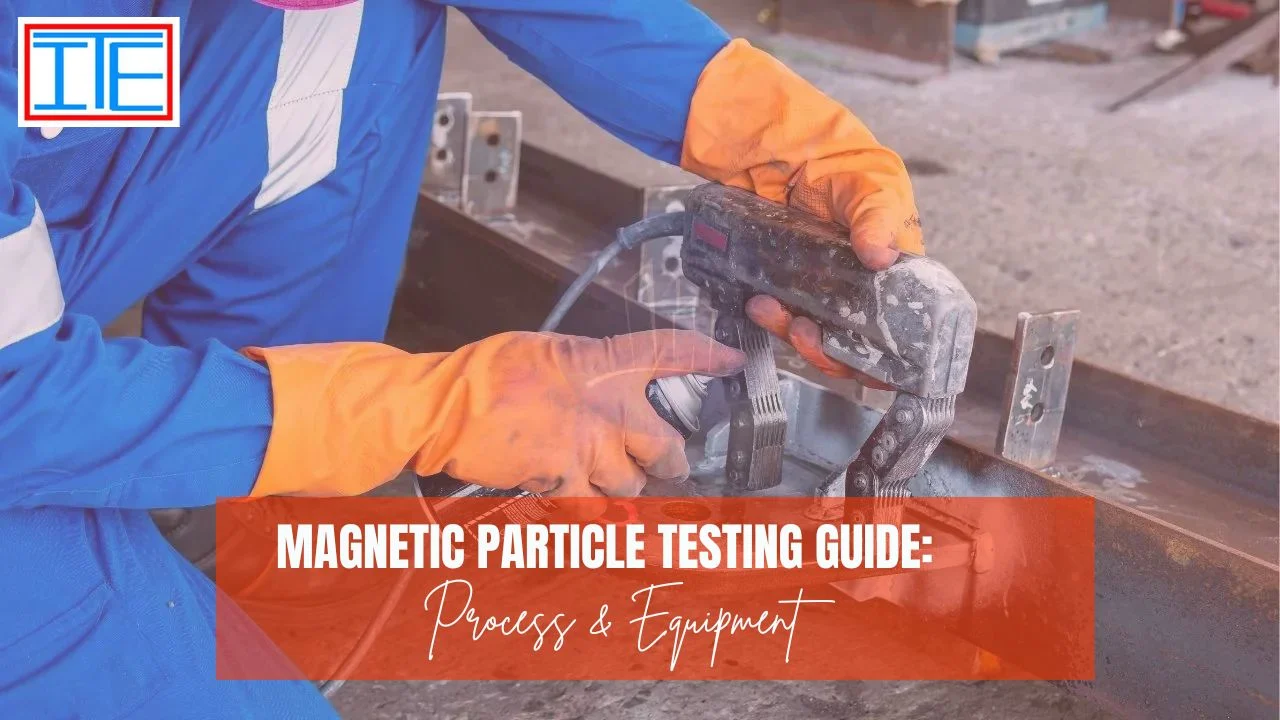
- Magnetization: The component is magnetized using either an electromagnetic yoke, coil, or permanent magnet. The direction of magnetization is critical for detecting defects.
- Application of Magnetic Particles: Dry powder or wet suspension magnetic particles are applied to the surface. These particles may be visible or fluorescent, depending on inspection requirements.
- Inspection and Interpretation: Under proper lighting (or UV light for fluorescent particles), inspectors observe particle accumulations that indicate defects.
- Demagnetization and Cleaning: After inspection, the component is demagnetized and cleaned to prevent interference with future use.
ITE Noida ensures inspections follow standard procedures to maintain accuracy and compliance with industry norms.
Also Read : Ways to improve High-Temperature Ultrasonic Thickness Measurements
Magnetic Particle Testing Equipment
The effectiveness of inspection depends greatly on the quality of magnetic particle testing equipment used. Common equipment includes:
- Magnetic Yokes – Portable devices ideal for field inspections
- Bench Units – Used for high-volume inspection of components
- Permanent Magnets – Useful in locations without power supply
- Magnetic Particles – Dry powders or wet fluorescent solutions
- UV Lamps – Required for fluorescent magnetic particle inspection
ITE Noida uses reliable and calibrated equipment to offer accurate testing results across various applications.
MPT Test for Welding
The mpt test for welding is one of the most common uses of magnetic particle testing. Welds are prone to defects such as cracks, lack of fusion, and porosity, which can compromise structural integrity. Magnetic particle testing helps detect these defects early, ensuring weld quality before components are put into service. This makes it an essential inspection method in construction, pipelines, pressure vessels, and heavy fabrication industries.
Application of Magnetic Particle Testing
The application of magnetic particle testing spans multiple industries due to its reliability and ease of use:
- Automotive Industry – Inspection of axles, gears, and engine components
- Oil & Gas Sector – Pipeline welds, valves, and pressure equipment
- Power Plants – Turbines, shafts, and structural components
- Manufacturing Units – Castings, forgings, and machined parts
- Aerospace & Railways – Safety-critical ferromagnetic components
Because the method is quick and cost-effective, it is widely adopted for both production and maintenance inspections.
Advantages of Magnetic Particle Inspection
Magnetic particle inspection offers several benefits that make it a preferred NDT method:
- High sensitivity to surface and near-surface defects
- Quick results with minimal setup time
- Cost-effective compared to advanced NDT methods
- Easy interpretation of indications
- Suitable for on-site and workshop inspections
ITE Noida focuses on leveraging these advantages to deliver dependable inspection services.
Why Choose ITE Noida for Magnetic Particle Testing?
ITE Noida combines technical expertise with practical industry experience to deliver accurate and dependable inspection services. Our company understands the importance of safety, compliance, and quality, especially in critical applications like welding and pressure equipment. We continue to offer inspection solutions that help clients reduce risk, avoid failures, and maintain high-quality standards.
Magnetic Particle Testing is a powerful and widely used non-destructive testing method for detecting defects in ferromagnetic materials. From understanding the magnetic particle testing procedure to selecting the right equipment and applying it in welding inspections, MPT plays a vital role in industrial quality control. ITE Noida stands as a reliable partner for magnetic particle inspection, helping industries ensure structural integrity and long-term performance with confidence.