
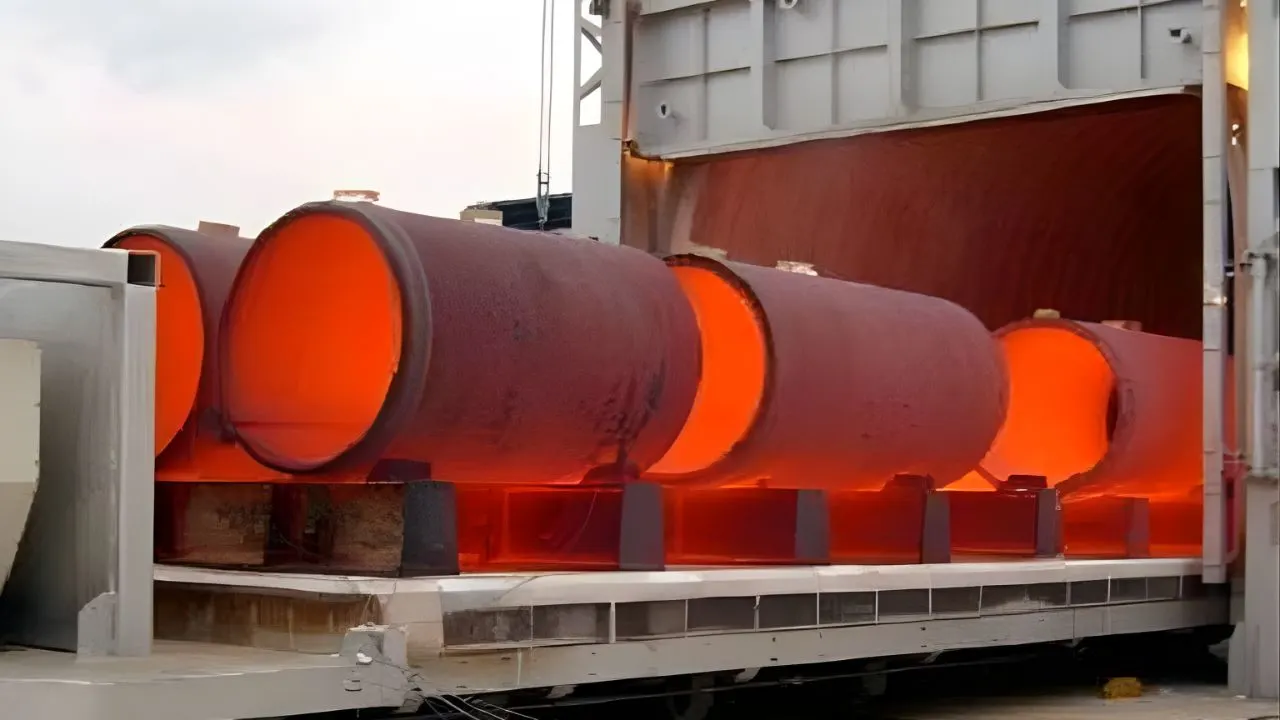
ITE Noida has been recognized for delivering high-quality industrial inspection and engineering solutions. One of the most important processes we handle for clients across oil & gas, fabrication, power, and heavy engineering sectors is Post Weld Heat Treatment (PWHT). Whether it’s ensuring the structural integrity of pipelines, pressure vessels, boilers, or critical fabrication components, PWHT plays a central role in reducing stress, improving material properties, and increasing the overall lifespan of welded structures.
What is Post Weld Heat Treatment?
Post Weld Heat Treatment, often referred to as PWHT, is a controlled heating and cooling process applied to welded components after welding is completed. The goal is to relieve internal stresses, enhance mechanical properties, and reduce the risk of cracking or structural failure. During welding, the base metal and the weld area experience extreme local heating and rapid cooling. This causes high residual stresses and microstructural changes, making the component vulnerable to corrosion, fractures, or distortion.
PWHT in Welding: Importance
The role of PWHT in welding cannot be overstated. Residual stresses and hard zones formed during welding can lead to cracking, reduced toughness, or even catastrophic failures. By implementing a proper pwht procedure, manufacturers can:
- Relieve Residual Stresses: Welding generates uneven heating and cooling, causing stress concentrations. Post weld heat treatment reduces these stresses.
- Improve Toughness: PWHT enhances ductility and toughness of both the weld and the heat-affected zone (HAZ).
- Reduce Risk of Cracking: Controlled heating and cooling minimize the likelihood of hydrogen-induced or cold cracking.
- Stabilize Microstructure: The process transforms the weld and base metal microstructure to improve mechanical properties.
- Enhance Service Life: Components that undergo proper pwht welding last longer and perform reliably in demanding applications.
Also Read : A Comprehensive Guide to Third Party Inspection Services (TPI)
PWHT Procedure
A proper pwht procedure involves precise temperature control, monitoring, and cooling processes. Below are the main steps:
- Pre-Heating: Before the main heat treatment begins, the component is pre-heated to avoid sudden temperature shocks. This reduces the risk of cracking and ensures uniform heating.
- Controlled Heating: The component is heated at a specified rate, typically between 300°C to 650°C depending on the material type. The heating needs to be slow and uniform to avoid thermal distortion.
- Soaking: Once the target temperature is reached, the component is held at that temperature for a predetermined time usually 1 hour per inch of thickness. This allows stress relief and structural refinement.
- Slow Cooling: Controlled cooling prevents the formation of brittle phases. Cooling must be gradual and consistent until the component reaches room temperature.
Types of Post Weld Heat Treatment
There are several types of pwht welding processes, each suited to different materials, thicknesses, and service conditions:
- Stress Relieving: The most common type of post weld heat treatment, stress relieving reduces residual stresses without significantly altering the microstructure of the material.
- Normalizing: Involves heating the welded component above the material’s critical temperature and allowing it to cool in air.
- Tempering: Typically applied to hardened steels, tempering reduces brittleness while maintaining strength.
- Austempering: A controlled process for steels that provides a combination of strength, toughness, and dimensional stability.
- Annealing: Softens the material to improve machinability and relieve stresses, particularly in thick sections.
Alternatives to PWHT
While post weld heat treatment is highly effective, certain situations may require alternatives due to cost, time, or material constraints. Common alternatives include:
- Controlled Welding Techniques: Proper welding sequences and low heat input can reduce residual stresses, sometimes eliminating the need for PWHT.
- Mechanical Stress Relief: Methods like vibratory stress relief or roller bending can reduce stresses in non-critical applications.
- Post-Weld Mechanical Treatments: Techniques like shot peening or hammer peening can relieve surface stresses.
Why PWHT Matters in Industrial Applications
Industries depend on pwht welding to ensure their equipment can handle the demanding conditions of daily operation. Here are the key benefits:
- Reduction of residual stresses: Improper stress distribution can lead to sudden failures. PWHT helps in relieving these stresses uniformly.
- Improved ductility and toughness: Heat treatment softens hardened microstructures formed during welding, improving flexibility and resistance to impact.
- Minimization of cracking risks: Stress-relief heat treatments drastically reduce hydrogen-induced cracking and stress corrosion cracking.
- Better dimensional stability: Components maintain their shape and alignment, ensuring smoother operations and longer component life.
ITE Noida continues to offer PWHT services to ensure industries operate safely and efficiently.
PWHT Welding Services by ITE Noida
ITE Noida is a leading provider of pwht in welding solutions, supporting industries such as oil and gas, power plants, and heavy machinery. Their services offer:
- Complete PWHT procedure planning and implementation
- Advanced equipment for controlled heating and cooling
- Monitoring systems to maintain temperature accuracy
- Post-treatment inspection and testing
- Technical guidance and compliance with international standards
With ITE Noida’s expertise, manufacturers can ensure that welded components meet performance expectations while enhancing safety and reliability.
Post weld heat treatment is a crucial process in welding that ensures structural integrity, reduces residual stresses, and enhances the performance of welded components. ITE Noida provides comprehensive pwht welding solutions, industries can offer high-quality welded components that meet international standards. Understanding the importance of post heating in welding and implementing precise PWHT processes is key to achieving durability, performance, and customer satisfaction in any welding project.