
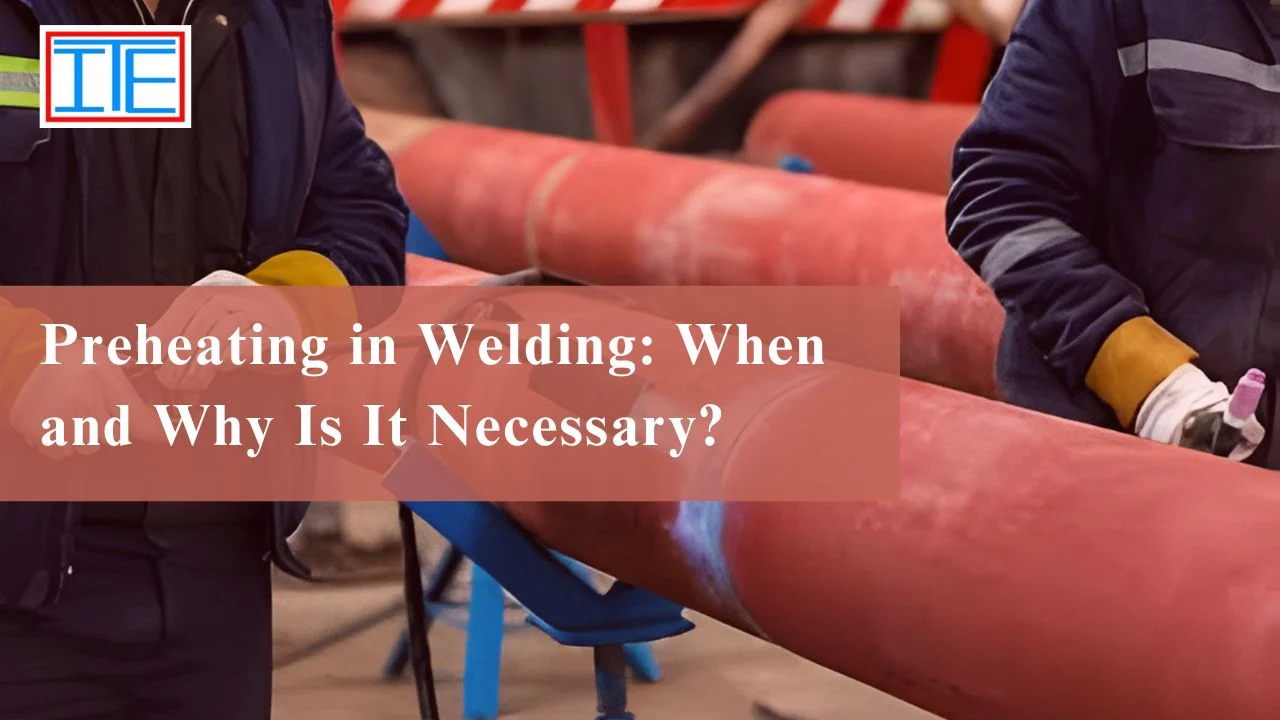
ITE Noida has always focused on guiding industries, technicians, and welding professionals with practical, real-world knowledge that improves work quality and safety. One such important concept in fabrication and metal joining is preheating in welding. Though many welders understand the basics of welding, not everyone realizes how critical temperature control is before striking the arc. Preheating is often overlooked, yet it plays a major role in preventing welding defects, improving weld quality, and increasing the life of welded components.
What Is Preheating in Welding?
Preheating in welding refers to the process of heating the base metal to a specific temperature before welding begins. This step is used mainly for thicker materials or metals that are prone to cracking during the welding process.
The purpose of weld preheating is not just to make the job easier for the welder. Instead, its main goal is to control how the material reacts to the heat from the welding arc. Without proper preheating, welds can develop cracks, distortions, or internal defects that are often invisible until failure occurs.
Why Is Preheating Necessary?
Preheating becomes essential due to the complex thermal reactions happening inside the metal. When cold metal suddenly receives arc heat, it expands rapidly, creating stress within the weld joint. This internal stress can lead to cracks or incomplete fusion.
Here are the main reasons why preheating in welding is necessary:
1. To Reduce the Cooling Rate: Metals cool very quickly after welding. A fast cooling rate makes the weld brittle. Preheating slows down this cooling, helping the weld metal solidify and bond properly. This drastically reduces the risk of cracks.
2. To Avoid Hydrogen-Induced Cracking: Moisture, oil, or contaminants contain hydrogen. If this hydrogen enters the weld pool, it can cause cracking. Preheating helps evaporate these contaminants and reduce hydrogen absorption.
3. To Improve Weld Ductility: Preheated materials stay soft and flexible for a longer period, allowing the weld to settle and bond more effectively. This results in smoother, stronger welds.
4. To Minimize Residual Stress: When two metal plates heat and cool unevenly, stress builds up at the joint. Preheating ensures uniform expansion and contraction, thereby minimizing residual stress.
5. To Enhance Penetration and Fusion: A warm base metal allows deeper penetration of weld heat, improving fusion and strengthening the joint.
When Is Preheating Required?
Preheating is not needed for every welding job. It becomes necessary based on three primary factors:
1. Type of Metal
Some metals are more prone to cracking and stress-related defects. Preheating is typically required for:
- High-carbon steels
- Alloy steels
- Cast iron
- Thick low-carbon steel plates
These materials expand and contract quickly, making welding preheat essential for stability.
2. Thickness of the Material
Thick plates absorb more heat and cool faster. Welders must preheat:
- Plates above 25 mm thickness
- Multi-pass welds on thick materials
- Structural components in heavy industries
Greater thickness means a higher recommended preheat temperature for welding.
3. Environmental Conditions
Cold weather or outdoor welding increases the risk of rapid cooling. Preheating is important during:
- Winter or cold climates
- Windy environments
- Construction sites
ITE Noida trains welders to analyze conditions and choose the appropriate weld preheating techniques based on equipment and ambient temperature.
How to Determine the Right Preheat Temperature
The correct preheat temperature for welding depends on:
- Material type
- Plate thickness
- Welding code or standard (AWS, ASME, etc.)
- Level of hydrogen control required
Professionals use temperature-indicating crayons, digital thermometers, or infrared guns to measure and maintain the correct temperature. ITE Noida continues to offer modern tools and training so welders can apply these techniques accurately.
Also Read : What is Ultrasonic Testing? How does it work?
Common Methods of Preheating
There are several ways to achieve welding preheat depending on material size and industrial setup:
- Induction heaters: Fast, uniform heating
- Gas torches: Common and economical
- Electric heating pads: Suitable for controlled heating
- Furnace heating: Ideal for large components
The goal is to heat the joint uniformly and maintain temperature throughout the welding process.
Benefits of Preheating in Welding
- Reduces cracking risk
- Improves metallurgical structure
- Enhances weld strength
- Minimizes distortion
- Ensures compliance with industrial standards
These benefits ensure long-term reliability and safety of welded structures.
Preheating in welding is more than just a preparation step; it is a crucial part of producing high-quality, crack-free welds. Whether you are working with thick plates, high-carbon steels, or low-temperature environments, understanding when and why preheat welding is necessary makes a huge difference in performance. ITE Noida continues to offer complete welding support, expert training, and technical guidance to help industries achieve stronger, safer, and more reliable welds.