One of the most trusted and widely used non-destructive testing (NDT) methods for this purpose is ultrasonic testing. ITE Noida stands out for its expertise and commitment to excellence. Our company continues to provide highly dependable ultrasonic inspection services that help industries maintain safety, precision, and long-term performance. Ultrasonic testing is known for its ability to detect internal flaws without damaging the component being tested. From aerospace to manufacturing, power plants to construction, UT has become a standard technique for quality assurance.
Ultrasonic testing (UT) is a non-destructive testing method that uses high-frequency sound waves to inspect and evaluate materials. These sound waves travel through the material and reflect back when they hit any flaw, crack, or boundary. By analyzing the returning signals, technicians can determine whether the material has internal defects or irregularities.
This method is highly effective in detecting:
- Cracks
- Porosity
- Inclusions
- Thickness variations
- Weld defects
- Corrosion
ITE Noida utilizes modern technology and skilled professionals to ensure accurate and reliable UT results that meet industry standards.
How Does Ultrasonic Testing Work?
Ultrasonic testing operates on the principle of sending high-frequency sound waves into a material and interpreting the response. To understand this better, let’s break down the process step-by-step.
1. Equipment Setup
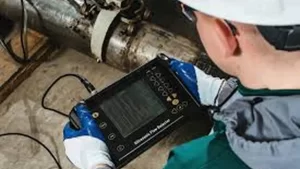
Ultrasonic testing uses specialized equipment consisting of:
- A transducer that emits and receives sound waves
- A couplant (gel or oil) to ensure smooth transmission of sound
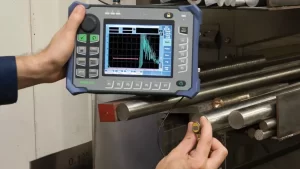
- A UT machine to display results
- Sometimes an ultrasonic testing diagram is used to understand wave flow and flaw locations
ITE Noida uses advanced machines that provide high accuracy and clear signal interpretation.
2. Sound Wave Transmission
During the ut test, the transducer sends ultrasonic waves into the material. These waves travel at a known speed, depending on the type of material.
3. Reflection of Sound Waves
When the waves hit any internal flaw—such as a crack or void—they reflect back to the transducer.
4. Signal Interpretation
The UT machine converts these reflections into visual signals. The technician compares these signals with standard reference charts or an ultrasonic testing diagram to determine:
- Size of the flaw
- Depth of the flaw
- Possible defect type
5. Reporting
Accurate data is documented and analyzed. ITE Noida continues to offer precise reports that help industries make informed decisions about repair, replacement, or continued use.
Advantages of Ultrasonic Testing
Ultrasonic testing is preferred across industries because it offers several benefits:
- High Accuracy: It can detect even very small internal defects that other methods might miss.
- Deep Penetration: UT waves can penetrate thick materials such as steel, concrete, and composites.
- No Damage to Material: Being a non-destructive method, the material remains intact and fully usable after testing.
- Instant Results: The UT machine displays immediate results, helping technicians make quick assessments.
- Versatile Applications: It works on metals, plastics, composites, welds, castings, and more.
Where is Ultrasonic Testing Used?
Ultrasonic testing is widely used in the following sectors:
- Construction Industry: To check weld quality and detect cracks in structures.
- Oil & Gas: To assess pipelines, storage tanks, and pressure vessels.
- Aerospace: For aircraft component inspection.
- Manufacturing: To detect defects in raw materials and finished products.
- Automobile Industry: For flaw detection in engine blocks and structural parts.
- Power Plants: UT helps monitor turbine blades, boilers, and critical components.
ITE Noida supports all these industries with advanced UT solutions tailored to their needs.
Also Read : Ultrasonic Thickness Measurements : Benefits & Importance
Ultrasonic Testing Diagram – Why Does It Matters?
An ultrasonic testing diagram visually represents how ultrasonic waves behave inside the material. It shows:
- The path of the sound wave
- The point where it hits a flaw
- The returning signal path
- The depth and type of defect
Such diagrams help technicians understand the flow of waves and ensure precise flaw detection. They are especially useful in weld inspection and thickness measurement.
Ultrasonic Testing remains one of the most dependable and advanced non-destructive testing methods for identifying internal flaws, measuring thickness, and ensuring the integrity of critical components. Its accuracy, deep penetration, and ability to deliver instant results make it essential for industries such as construction, aerospace, manufacturing, and oil & gas. UT ensures that materials meet safety and quality standards without causing any damage. ITE Noida continues to provide reliable ultrasonic test solutions backed by modern equipment and experienced professionals. Our commitment to quality, detailed reporting, and customer-focused service makes them a trusted partner for industries seeking accurate and efficient UT test services.