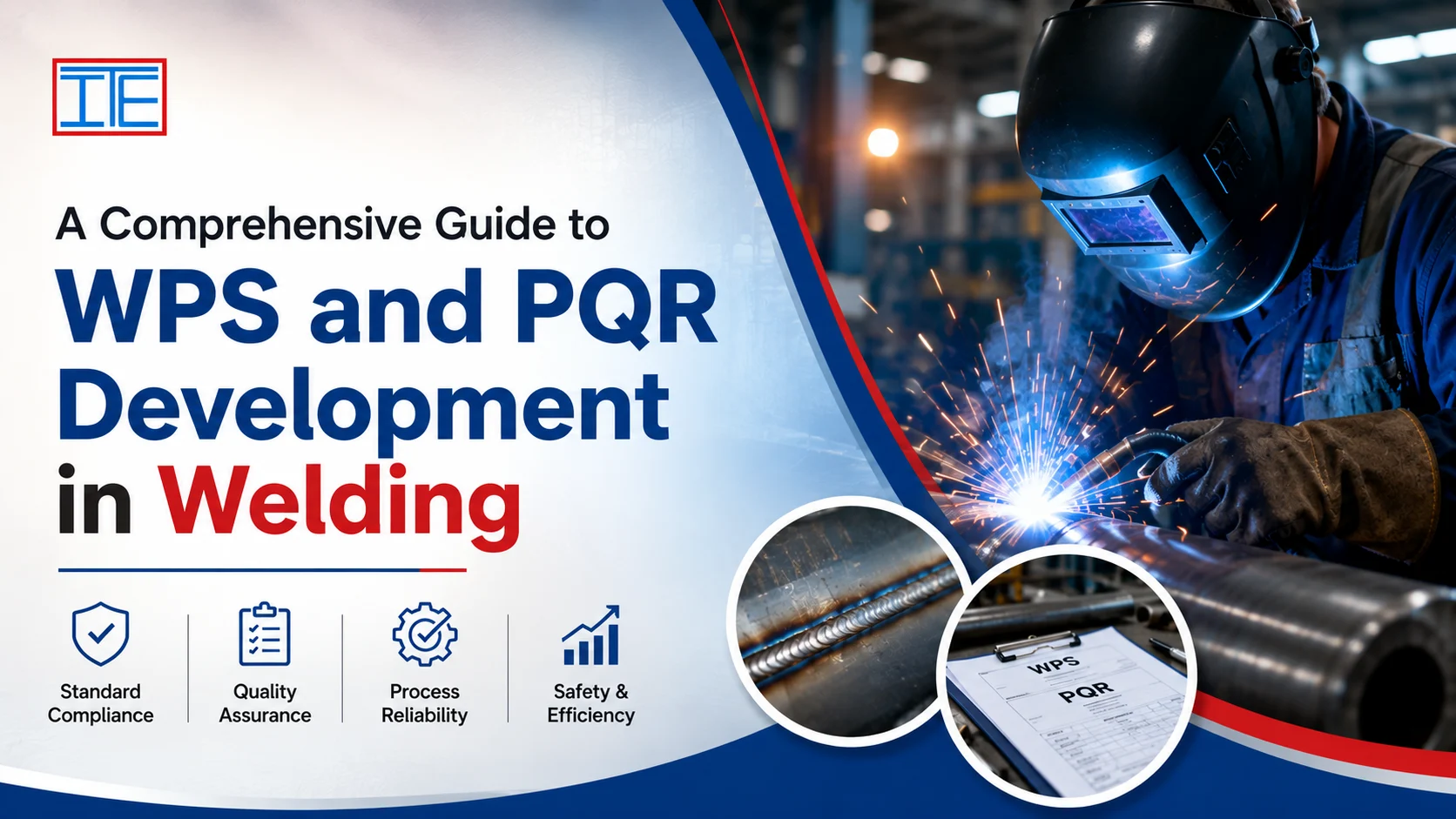
Welding is a critical process used across industries such as construction, manufacturing, oil and gas, power plants, shipbuilding, and infrastructure development. To ensure consistency, quality, and safety in welded joints, industries follow standardized procedures and qualification methods. Two of the most important documents in welding quality assurance are the Welding Procedure Specification (WPS) and Procedure Qualification Record (PQR). Understanding how these documents are developed is essential for achieving reliable welding results and meeting industry standards.
ITE Noida is a recognized organization that helps professionals and industries enhance their welding knowledge and technical skills. Through specialized training and technical programs, we offer valuable guidance on welding procedures, inspection methods, and qualification requirements.
What is WPS in Welding?
A Welding Procedure Specification (WPS) is a formal document that provides detailed instructions on how a welding operation should be performed. It serves as a guideline for welders to ensure consistency and repeatability during the welding process. The primary purpose of a WPS is to ensure that every weld meets the required quality and performance standards.
What is PQR in Welding?
A Procedure Qualification Record (PQR) is a document that validates the welding procedure outlined in the WPS. Before a WPS can be approved for production welding, it must be qualified through testing and documentation.
The term pqr welding refers to the process of conducting qualification tests and recording actual welding parameters used during testing. These records demonstrate that the welding procedure can produce sound welds that meet mechanical and metallurgical requirements. The PQR serves as evidence that the welding procedure is capable of producing acceptable weld quality.
Importance of WPS and PQR Development
Developing proper WPS and PQR documentation is essential for maintaining welding quality and compliance with industry codes.
Benefits include:
- Improved weld consistency
- Enhanced product quality
- Compliance with international standards
- Reduced welding defects
- Increased safety and reliability
- Better documentation and traceability
Organizations that offer welding services often rely on qualified procedures to meet client requirements and regulatory standards.
Steps in WPS and PQR Development
1. Selection of Welding Variables
The first step involves selecting the essential welding variables, including:
- Welding process
- Base metal type
- Filler metal
- Joint configuration
- Welding position
- Heat input parameters
Proper selection ensures that the qualification process reflects actual production conditions.
2. Preparation of Test Coupon
A test coupon is prepared according to applicable welding codes and standards. The dimensions and material specifications must match the intended application.
This stage is particularly important in pqr welding because the test coupon serves as the basis for qualification testing.
3. Performing the Qualification Weld
A qualified welder performs the weld using the selected parameters. During welding, all variables are carefully monitored and recorded.
4. Testing and Inspection
After welding is completed, the test specimen undergoes inspection and testing.
Common tests include:
- Visual inspection
- Tensile testing
- Bend testing
- Impact testing
- Macro examination
- Radiographic testing
- Ultrasonic testing
These tests confirm whether the welding procedure meets required quality standards.
5. Documentation of Results
All test results and welding parameters are recorded in the PQR document. If the procedure successfully passes all required evaluations, the data is used to create the final WPS.
Organizations such as ITE Noida offer training programs that help professionals understand documentation requirements and qualification procedures.
Industry Standards for WPS and PQR
Several international codes govern welding qualification processes.
Common standards include:
- ASME Section IX
- AWS D1.1
- ISO 15614
- API Standards
- EN Welding Standards
Each standard specifies qualification requirements, testing procedures, and acceptance criteria for different industries and applications.
Following these standards ensures that welding procedures are accepted globally and comply with industry regulations.
WPS and PQR development forms the foundation of quality welding operations. A properly qualified welding procedure ensures consistency, reliability, and compliance with industry standards. While the WPS provides detailed instructions for welding activities, pqr welding validates that those procedures can produce acceptable and durable welds.
For industries seeking high-quality welding performance, understanding the relationship between WPS and PQR is essential. With expert guidance, technical knowledge, and proper qualification practices, organizations can achieve superior welding results. ITE Noida continues to support welding professionals by helping them develop the skills and expertise needed to successfully manage welding procedures and quality assurance requirements.