As one of the most widely used Non-Destructive Testing (NDT) techniques, it helps inspectors identify hidden flaws without causing any damage to the material. ITE Noida is a trusted name in inspection and testing services, delivering advanced ultrasonic testing solutions for various industrial applications. With experienced professionals and modern equipment, our company offers accurate inspection services that help industries maintain quality, safety, and compliance with international standards.
Unlike destructive testing methods, ultrasonic testing allows inspectors to evaluate the integrity of a component without cutting, breaking, or damaging it. This makes it one of the most reliable and cost-effective inspection techniques for quality assurance.
What is Ultrasonic Testing?
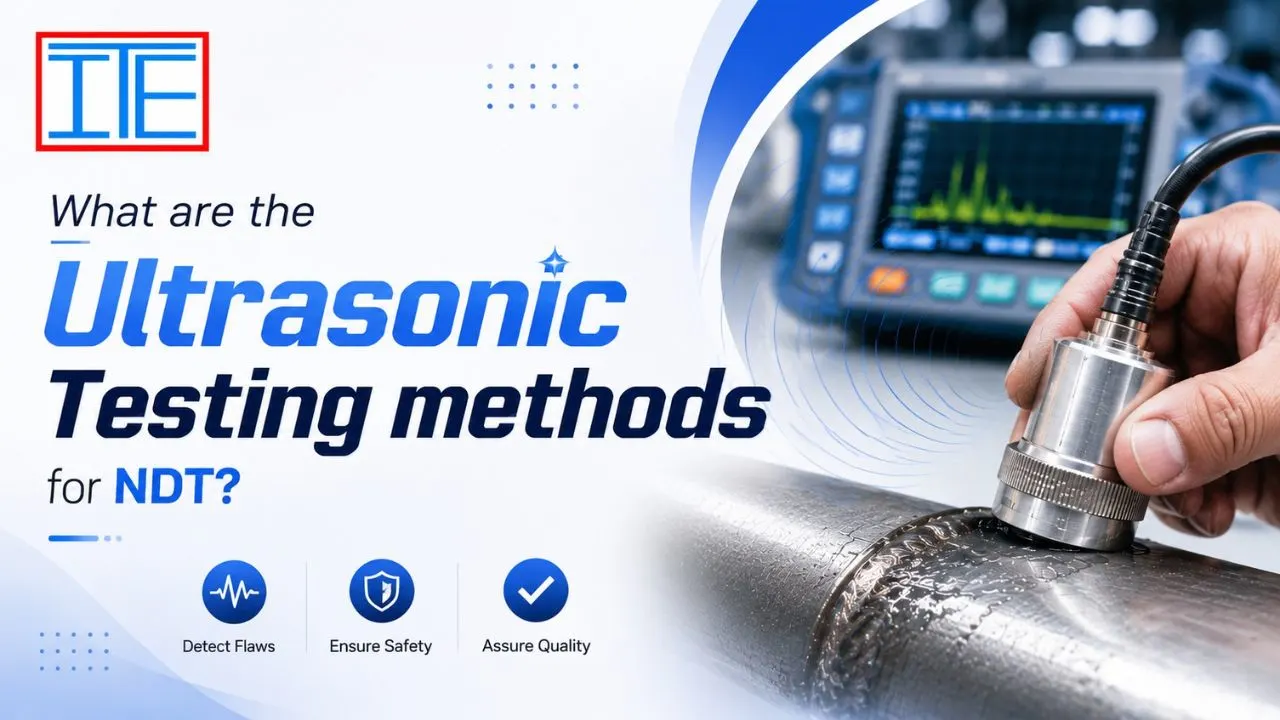
Ultrasonic Testing (UT) is a Non-Destructive Testing method that uses high-frequency sound waves to inspect the internal condition of materials and components. During the inspection, an ultrasonic probe sends sound waves into the test material. When these waves encounter a crack, void, inclusion, or any discontinuity, they reflect back to the probe. The reflected signals are analyzed to determine the size, depth, and location of the defect.
Why is Ultrasonic Testing Important?
Many structural failures begin with tiny internal cracks that are invisible to the naked eye. Detecting these defects before they grow helps prevent costly repairs, production downtime, and safety hazards.
The advantages of ndt ultrasonic testing include:
- Detects internal defects with high accuracy
- Measures material thickness precisely
- Inspects thick metal sections effectively
- Provides immediate inspection results
- Reduces maintenance costs
- Improves workplace safety
- Extends equipment life
- Supports quality assurance and regulatory compliance
Because of these advantages, industries worldwide depend on ndt ultrasonic testing for routine inspections and preventive maintenance.
Common Ultrasonic Testing Methods for NDT
Several inspection methods are available depending on the material, component geometry, and inspection requirements.
1. Pulse-Echo Method
The Pulse-Echo method is the most commonly used ultrasonic testing ut technique. In this method, a single transducer both transmits and receives ultrasonic waves. When the sound waves strike an internal flaw or the back wall of the material, echoes return to the probe.
This method is widely used for:
- Weld inspection
- Casting inspection
- Forging inspection
- Pressure vessel examination
- Pipeline inspection
It is ideal for locating internal defects and measuring material thickness.
2. Through Transmission Method
In this method, one probe transmits ultrasonic waves while another probe receives them on the opposite side of the component. If an internal defect blocks the sound path, the received signal decreases.
This technique is suitable for:
- Composite materials
- Plastic components
- Bond inspection
- Laminated structures
Although it detects defects effectively, it does not accurately determine defect depth.
3. Phased Array Ultrasonic Testing (PAUT)
Phased Array Ultrasonic Testing is one of the most advanced ndt ultrasonic testing methods. It uses multiple ultrasonic elements that are electronically controlled to steer, focus, and scan the ultrasonic beam.
Benefits include:
- Faster inspections
- High-resolution imaging
- Accurate defect sizing
- Complete weld coverage
- Digital inspection records
PAUT is commonly used in refineries, power plants, aerospace, and heavy engineering industries.
4. Time of Flight Diffraction (TOFD)
TOFD is an advanced inspection method that accurately measures crack size using diffracted ultrasonic waves generated from defect tips.
It offers:
- Precise crack measurement
- Excellent repeatability
- Permanent inspection documentation
- High inspection reliability
TOFD is particularly useful for inspecting critical welded joints where defect sizing is extremely important.
5. Immersion Ultrasonic Testing
Immersion testing involves placing the test component in water while ultrasonic waves are transmitted through the water into the material.
Applications include:
- Aerospace components
- Precision machined parts
- Composite materials
- Automated production inspection
The water provides excellent coupling, ensuring consistent and highly accurate inspection results.
6. Contact Ultrasonic Testing
Contact testing is the most common ultrasonic testing ut method used in field inspections. A couplant gel is applied between the probe and the test surface to allow efficient sound transmission.
This method is widely used for:
- Steel structures
- Pipelines
- Storage tanks
- Pressure vessels
- Machinery components
Its portability makes it suitable for both workshop and onsite inspections.
Applications of Non Destructive Testing Ultrasonic Inspection
Non destructive testing ultrasonic inspection is widely used across numerous industries where material integrity is critical.
Common applications include:
- Weld quality inspection
- Pipeline integrity testing
- Boiler inspection
- Pressure vessel examination
- Structural steel inspection
- Railway component testing
- Shipbuilding inspection
- Automotive component testing
- Aerospace part inspection
These inspections help detect defects before they become serious failures, reducing maintenance costs and improving operational safety.
Benefits of Ultrasonic Testing
Industries continue to adopt ultrasonic testing because it offers several significant advantages:
- Detects very small internal defects
- High penetration in thick materials
- Accurate defect location and sizing
- Fast inspection process
- Immediate analysis
- No damage to tested components
- Safe inspection without radiation
- Suitable for automated inspections
- Highly reliable results
- Cost-effective long-term maintenance solution
These advantages make non destructive testing ultrasonic inspection one of the preferred methods for quality assurance and preventive maintenance.
Understanding the various ultrasonic testing methods helps industries select the most suitable inspection technique for their specific applications. Whether using Pulse-Echo, Through Transmission, PAUT, TOFD, Immersion Testing, or Contact Testing, every method plays an important role in detecting hidden defects while preserving the integrity of the tested component.
Modern ultrasonic testing ut techniques improve quality control, reduce equipment failures, and enhance workplace safety. Through effective non destructive testing ultrasonic inspection, industries can extend equipment life, minimize downtime, and ensure compliance with international quality standards. If you are looking for reliable inspection solutions, ITE Noida can offer professional ultrasonic testing services designed to deliver accurate, efficient, and dependable results for a wide range of industrial applications.