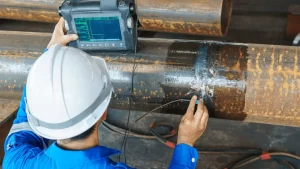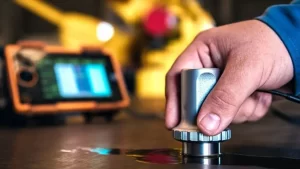

Testing Welds is so important in the quality word process. One of the most effective ways to ensure weld quality is non destructive testing of welds. At ITE Noida, we specialize in advanced testing methods that guarantee safety without damaging the material. We offer comprehensive services in the NDT test for welding, ensuring that every weld is inspected thoroughly while keeping the component intact.
What is Non Destructive Testing (NDT) of Welds?
Non destructive testing for welding refers to a group of inspection methods that use high quality welds without cutting, breaking, or destroying the welded joint. Unlike destructive testing (where samples are pulled apart or bent until failure), NDT allows the weld to remain in use after inspection. This makes it particularly valuable in industries where components are expensive, large in size, or crucial to safety.
Types of NDT Test for Welding
There are several methods available, depending on the material, type of weld, and nature of the defect being inspected. At ITE Noida, we offer a wide range of these techniques.
- Visual Inspection (VT): The most basic form of welding testing involves examining the weld with the naked eye.. Inspectors look for visible defects like cracks, undercutting, porosity, or misalignment.
- Radiographic Testing (RT): This method uses X-rays or gamma rays to create images of the weld’s internal structure. It is one of the most reliable ways to detect inclusions, and cracks hidden inside the weld.
- Ultrasonic Testing (UT): High-frequency sound waves are sent into the material. Reflections from flaws or boundaries are measured, allowing inspectors to identify even very small internal defects.
- Magnetic Particle Testing (MPT): This is used for detecting surface and slightly subsurface defects in ferromagnetic materials. A magnetic field is applied, and fine particles are spread on the surface; they gather at defect locations.
- Dye Penetrant Testing (DPT): A liquid dye is applied to the weld surface. It seeps into cracks and, under ultraviolet light, reveals surface-breaking flaws.
- Eddy Current Testing (ECT): This method uses electromagnetic induction to detect cracks and other surface defects in conductive materials.
Why Choose ITE Noida?
At ITE Noida, we understand that every weld tells a story, and it is our responsibility to make sure that story is one of strength and reliability. We use the latest equipment in radiography, ultrasonics, and other NDT methods. From small fabrication shops to large industrial plants, we offer built-made NDT solutions. Beyond testing, we guide clients on corrective measures and quality improvement.
Applications of Non Destructive Testing in Welding
NDT plays a crucial role in almost every industry where welding is involved. Some key applications include:
- Construction: Checking welds in bridges, buildings, and steel structures.
- Oil & Gas: Ensuring the integrity of pipelines and pressure vessels.
- Power Plants: Inspecting boilers, turbines, and structural welds.
- Aerospace: Guaranteeing safety in aircraft structures.
- Automotive: Testing welds in frames, chassis, and safety-critical parts.
By choosing ITE Noida, industries gain access to reliable non destructive testing welding services that meet both local and international standards.
Also Read: What Is Non-Destructive Testing (NDT)? A Complete Guide
The non destructive test for welds is more than just a quality check, it’s a commitment to safety, reliability, and efficiency. Whether it’s a small weld in a machine part or a large joint in a bridge, ensuring that it is defect-free is crucial.
At ITE Noida, we combine experience, technology, and dedication to deliver the highest quality NDT test for welding. We proudly offer inspection services that not only meet but exceed industry standards.